


How Much Do Dental Implants Cost in Salt Lake City? Process, Pricing & What to Expect

If you are missing a tooth — or several — dental implants are often the closest thing to getting your natural teeth back. But two questions stop most people before they start: what does the process actually involve, and what will it cost? This guide walks through both, so you can decide whether implants are the right investment for your smile.
What Is a Dental Implant?
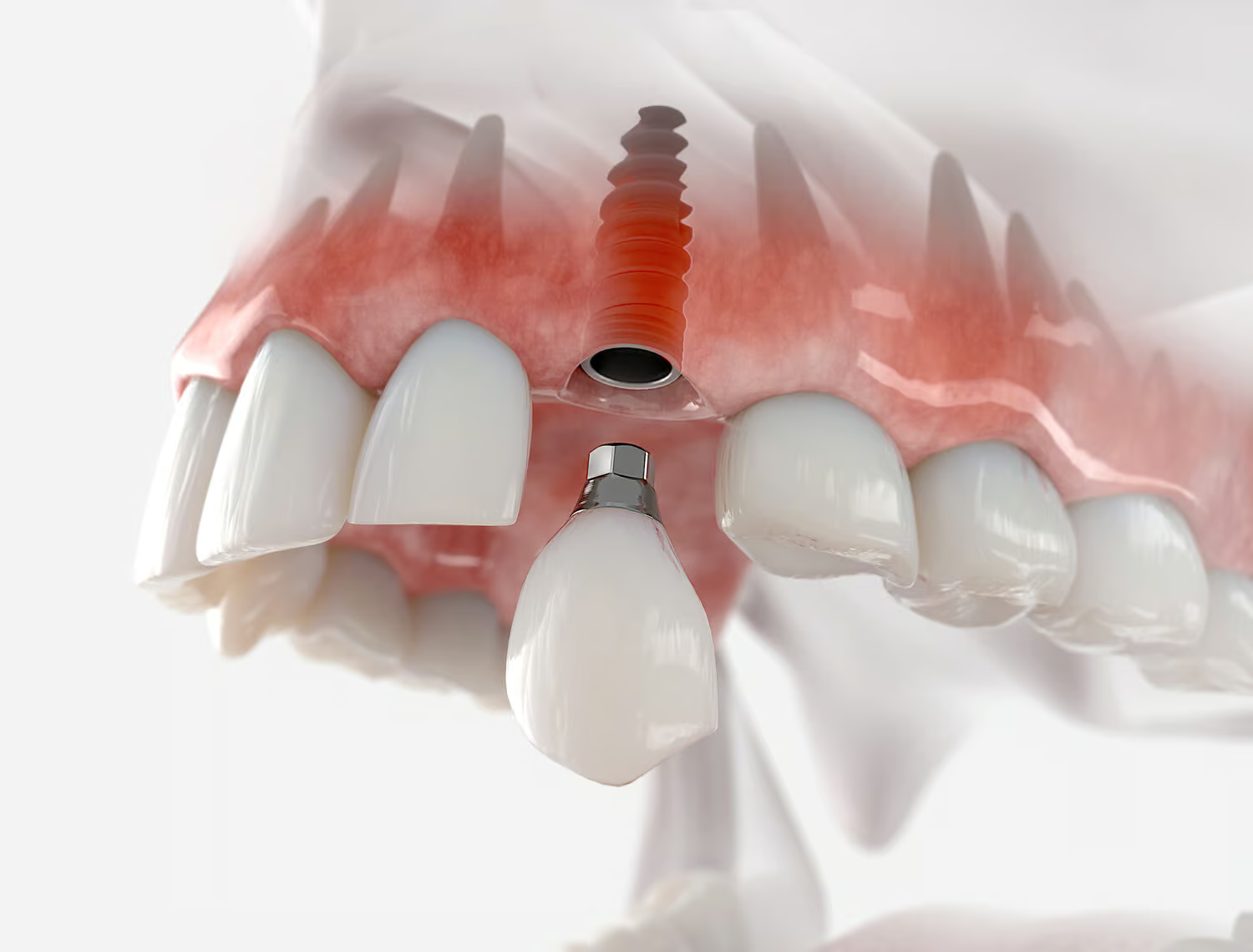
A dental implant is a small titanium post that acts as a replacement tooth root. It is placed into your jawbone, where it fuses with the bone over time to create a stable foundation. A custom crown is then attached on top, giving you a replacement tooth that looks, feels, and functions like a natural one. Unlike a bridge, an implant does not rely on the neighboring teeth for support, and unlike a removable denture, it stays permanently in place.
How Much Do Dental Implants Cost?
Dental implant cost varies widely because "implant" can mean anything from replacing a single tooth to restoring a full arch. As a general guide, a single-tooth implant in the United States typically falls somewhere in the range of $3,000 to $6,000 when you include the implant, abutment, and crown. Full-arch solutions like All-on-4 cost more because they replace an entire row of teeth on just a few implants.
That range is for context, not a quote. Your actual cost depends on the specific factors below, and the only way to get a real number is a consultation — where Dr. Brigham Stoker evaluates your case and provides a detailed estimate before anything begins, with no surprise expenses.
What Affects the Cost of Dental Implants?
How Many Teeth You're Replacing
Replacing one tooth is far different from restoring a full arch. A single implant is the most affordable starting point, while multiple implants or an All-on-4 full-arch restoration represent a larger investment that also delivers a much larger result.
Whether You Need Additional Procedures
Some patients need preliminary work before an implant can be placed. If the jawbone has shrunk after tooth loss, a bone graft may be needed to rebuild a strong foundation. An extraction may also be required if a damaged tooth is still present. At Stoker Dental, bone grafting and implant placement are both done in-house, which keeps the process simpler and coordinated under one roof.
The Type of Implant and Restoration
A single implant with a crown, an implant-supported bridge, and full-arch All-on-4 all carry different costs. Mini dental implants, often used to stabilize loose dentures, are another option that may cost less for the right candidate.
The Technology Behind the Placement
Precise planning protects your investment. Stoker Dental uses cone beam CT scanning and computer-guided placement to map each implant in 3D before surgery, which improves accuracy and predictability. This planning happens in-house, without referring you to an outside imaging center.
The Dental Implant Process, Step by Step
One reason people hesitate is simply not knowing what to expect. Here is the typical journey.
1. Consultation and 3D Planning
Your first visit includes a thorough exam and a cone beam CT scan. Dr. Stoker evaluates your bone, discusses your goals, and maps out a precise treatment plan. You will receive a clear estimate of the timeline and cost before committing.
2. Preparing the Site (If Needed)
If an extraction or bone graft is necessary, that happens first. Not every patient needs this step — it is determined case by case using your 3D imaging.
3. Implant Placement
The titanium post is placed into the jawbone during a precise, guided procedure. Many patients are surprised by how comfortable this step is, and sedation options are available for those who want them.
4. Healing and Integration
Over the following months, the implant fuses with your jawbone in a process called osseointegration. This is what gives an implant its lasting stability. A temporary restoration may be worn during this period.
5. Placing Your Final Restoration
Once the implant has integrated, your custom crown, bridge, or denture is attached. The result is a secure, natural-looking replacement designed to match your surrounding teeth.
Are Dental Implants Worth It?
For many people, yes — because implants solve problems other options cannot. They preserve jawbone that would otherwise deteriorate after tooth loss, they do not damage neighboring healthy teeth the way a traditional bridge can, and with good care they are designed to last for decades. While the upfront cost is higher than dentures or a bridge, implants are often the better long-term value because they rarely need replacement and function like natural teeth.
That said, implants are not the only answer for every situation. Part of an honest consultation is hearing when a bridge or denture might serve you just as well — and Dr. Stoker is known for recommending only the treatment you genuinely need.
Insurance and Financing for Dental Implants
Coverage for implants varies. Some dental plans contribute toward the crown or restoration portion, or toward a medically necessary extraction or graft, even when they do not cover the implant itself. Stoker Dental accepts more than 19 insurance plans and verifies your benefits so you know what to expect.
For costs not covered by insurance, CareCredit financing and the BoomCloud in-house membership plan help make treatment manageable. You can find details on our Insurance & Financing page.
Take the First Step Toward Restoring Your Smile
The best way to understand your options and your cost is a personalized evaluation. Dr. Stoker will map your case in 3D, walk you through your choices, and give you a clear estimate — with no pressure and no surprise expenses.
Learn more about dental implants at Stoker Dental or call (801) 505-6850 to schedule your consultation.
Frequently Asked Questions
How much does a single dental implant cost?
A single-tooth implant in the U.S. generally falls within a range of about $3,000 to $6,000 including the implant, abutment, and crown, though your cost depends on your specific needs. The most accurate figure comes from a consultation with Dr. Stoker, who provides a detailed estimate before treatment begins.
How long does the dental implant process take?
From placement to final restoration, the process often spans several months, because the implant needs time to fuse with the jawbone. Cases that require a bone graft or extraction first may take longer. Your exact timeline is mapped out at your consultation using 3D imaging.
Does dental implant surgery hurt?
Most patients are surprised by how comfortable implant placement is. The procedure is done with local anesthetic, and sedation options such as oral conscious sedation and nitrous oxide are available for added comfort. Mild soreness afterward is normal and typically manageable.
Does insurance cover dental implants?
Coverage varies by plan. Some plans contribute toward the crown, extraction, or bone graft portion even when they do not cover the implant post itself. Stoker Dental accepts more than 19 insurance plans and verifies your benefits, and offers CareCredit and a membership plan to help with remaining costs.
Are dental implants better than dentures or a bridge?
Implants offer advantages that other options cannot: they preserve jawbone, do not rely on neighboring teeth, and can last for decades. However, dentures or a bridge are sometimes the better fit depending on your situation and budget. An honest consultation helps you choose the right option rather than the most expensive one.
Do I have enough bone for a dental implant?
Many patients do, but some need a bone graft first if the jawbone has shrunk after tooth loss. A cone beam CT scan shows exactly how much bone you have, and because Stoker Dental performs grafting in-house, the entire process stays coordinated under one roof.
