


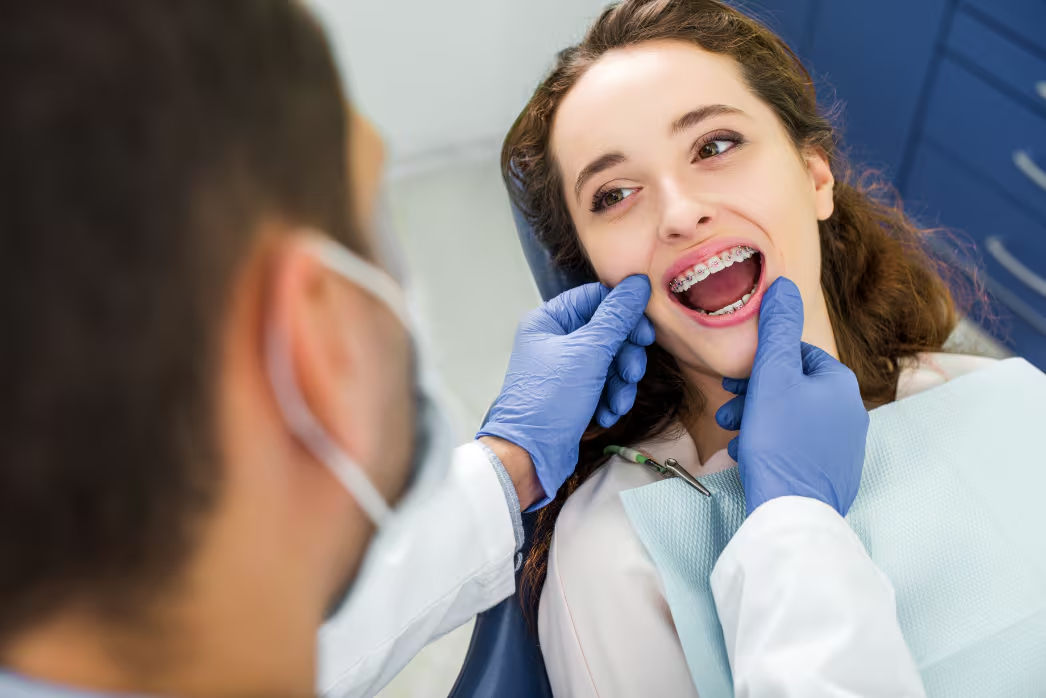

If you have spent years wishing your teeth were straighter but assumed braces were something you missed out on as a teenager, here is the short answer: no, you are not too old. Adults of every age successfully straighten their teeth, and the options available today look very different from the braces you remember from middle school. This guide covers what adult orthodontic treatment actually involves, which option might fit you, and what to expect.
There's No Age Limit on Straightening Teeth
Teeth move throughout your life. That is why teeth can shift in your thirties, forties, and beyond — and it is also why orthodontic treatment works at any age. What matters is not how old you are but whether your teeth and gums are healthy enough to support treatment.
The one real difference: adult bone is denser and no longer growing, so treatment can take somewhat longer than it would for a teenager, and certain bite corrections that are simple in a growing child may need a different approach in an adult. Neither of these rules out treatment. They just shape the plan.
Why More Adults Are Getting Treatment
Adults seek orthodontic care for a mix of reasons, and most are not purely cosmetic.
Teeth that have shifted over the years — including after previous orthodontic work, if retainers stopped being worn — are one of the most common reasons. Others want to correct something that was never addressed in childhood. And many are motivated by health: crowded or overlapping teeth are harder to clean, which can raise the risk of cavities and gum disease, while an uneven bite can contribute to jaw discomfort, headaches, and uneven wear on enamel.
Straightening your teeth as an adult is often as much about function and long-term health as appearance.
Your Options for Adult Orthodontic Treatment
Traditional Braces
Metal braces remain the most versatile option, particularly for complex cases. Brackets bonded to each tooth and connected by a wire give your provider precise control over movement in multiple directions. They work on essentially any case, they are always working (no wear-time discipline needed), and modern brackets are noticeably smaller than those of a generation ago.
The trade-off is visibility and some lifestyle adjustment — avoiding hard, sticky, and chewy foods, and spending more effort cleaning around the brackets.
Invisalign and Clear Aligners
Clear aligners are removable, virtually invisible trays that move teeth gradually. For adults with mild to moderate crowding, spacing, or alignment concerns, they offer a discreet option with no food restrictions and normal brushing and flossing.
The catch is discipline: aligners work only when worn 20 to 22 hours a day. If you know you would leave them out, fixed braces may actually be the more practical choice. Learn more about Invisalign here, or read our full comparison of Invisalign and braces for adults.
6-Month Smiles
This approach focuses on the teeth that show when you smile, using clear brackets and tooth-colored wires to align the front teeth in a shorter timeframe. It is a cosmetically focused option — it is not designed to correct significant bite problems — but for the right candidate who mainly wants to improve the appearance of their smile, it can be an efficient path. Learn more about 6-Month Smiles here.
How Long Does Treatment Take for Adults?
Treatment length depends far more on your case than on your age or the appliance. Many adults complete treatment in roughly 12 to 24 months, with simpler cases finishing sooner and complex ones running longer. Cosmetically focused treatment on the front teeth can be shorter still.
At your consultation, a 3D digital scan maps out each stage of movement, so you get a projected timeline specific to your teeth rather than a generic estimate.
What About Work and Social Life?
This is the concern that stops most adults, and it is worth addressing directly. Clear aligners are designed to be virtually unnoticeable in meetings and conversations, and they can be removed for a presentation or a photo. Clear or tooth-colored bracket options reduce the visibility of fixed braces considerably.
It is also worth noting how normal adult orthodontic treatment has become. Far more adults are in treatment now than when you were in school, and most people simply do not react the way you might be imagining.
Why the Provider Matters
Any orthodontic treatment is only as good as the plan behind it — and that is especially true for adults, where bone density, existing dental work, and gum health all factor into what is possible.
At Stoker Dental & Orthodontics, orthodontic care is a core part of the practice rather than an add-on. Dr. Brigham Stoker teaches orthodontic courses to other general dentists through Progressive Orthodontic Seminars and serves as a General Dentistry Advisor for Ultradent Products. His background includes a dental degree from the University of North Carolina School of Dentistry and graduate degrees in physics from the University of Utah — a combination that brings a precise, analytical approach to planning tooth movement.
Just as important, he will give you an honest recommendation, including telling you when a simpler option would serve you just as well.
Is It Worth It?
Most adults who complete orthodontic treatment say they wish they had started sooner. Beyond the confidence of a straighter smile, you get teeth that are easier to keep clean, a bite that distributes force more evenly, and protection against the gradual problems that misalignment can cause over decades. Addressing it sooner usually means simpler, shorter treatment than waiting.
Find Out What's Possible for Your Smile
The only way to know which option fits your teeth, your timeline, and your life is an evaluation. Dr. Stoker will examine your teeth and bite, map your case in 3D, and walk you through your realistic options with a clear estimate — no pressure, no surprise expenses.
Explore our orthodontic options or call (801) 505-6850 to schedule your consultation.
Frequently Asked Questions
Am I too old for braces?
No. There is no upper age limit for orthodontic treatment. Teeth can be moved at any age as long as your teeth and gums are healthy. Adult bone is denser and no longer growing, so treatment may take somewhat longer than for a teenager, but it works.
How long do braces take for adults?
Most adults complete treatment in roughly 12 to 24 months, depending on the complexity of the case. Simpler corrections finish sooner, and cosmetically focused treatment on the front teeth can be shorter. A 3D scan at your consultation provides a timeline specific to your teeth.
Are braces or Invisalign better for adults?
Neither is universally better. Clear aligners suit adults with mild to moderate concerns who want a discreet, removable option and will wear them 20 to 22 hours a day. Traditional braces offer more control for complex cases and require no wear-time discipline. The right choice depends on your case and lifestyle.
Do braces hurt more as an adult?
Adults often report mild pressure and soreness after adjustments or when switching to a new aligner, similar to what younger patients experience. It typically eases within a few days. Because adult bone is denser, movement can feel slightly slower, but discomfort is generally manageable.
Will my insurance cover braces as an adult?
Some dental plans include orthodontic benefits that apply to adults, though many have a lifetime orthodontic maximum and some limit coverage by age. Stoker Dental accepts more than 19 insurance plans and verifies your benefits before treatment, with CareCredit financing and a membership plan available for remaining costs.
Can I get braces if I had them as a kid and my teeth shifted?
Yes, and this is very common — usually the result of retainer wear stopping after the original treatment. Re-treatment is often simpler and shorter than the first round, since the movement needed is typically less significant. A consultation will show what your case requires.
